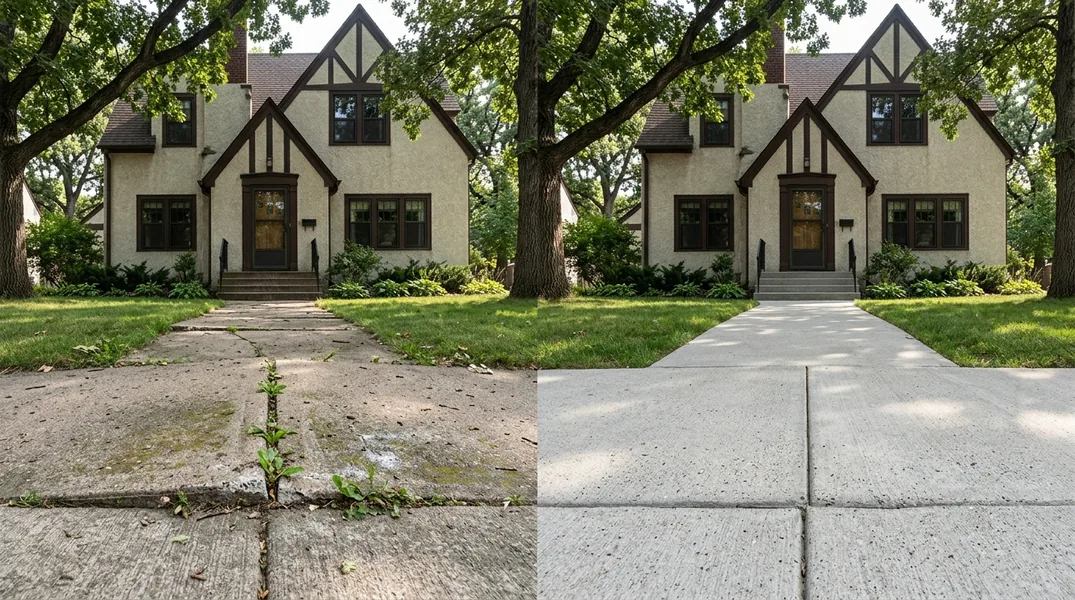
Understanding Frost Heave and Freeze-Thaw Damage
If you live in Minneapolis, you know that winter is unforgiving. One of the most destructive forces acting on your concrete driveway isn't the snow plow or road salt, but rather a process called frost heave combined with freeze-thaw cycles. These natural phenomena are responsible for more concrete damage in Minnesota than most homeowners realize.
Frost heave occurs when moisture in the soil beneath your driveway freezes and expands. Water naturally expands about 9 percent when it freezes, and when this happens underground, it creates tremendous upward pressure. Over time, this repeated expansion and contraction during Minnesota's long winters can push your concrete driveway upward, creating uneven surfaces, cracks, and structural damage. The freeze-thaw cycle compounds the problem: water seeps into small cracks in your concrete, freezes, expands, and forces the crack wider. When spring arrives and temperatures warm, the ice melts and the concrete settles back down, but the damage has already been done. This cycle repeats year after year, progressively worsening the condition of your driveway.
Why Clay Soil Makes the Problem Worse
Many properties throughout the Minneapolis area are built on clay-rich soil, which is particularly susceptible to frost heave. Clay soil has a unique property: it holds water very effectively. Unlike sandy or well-draining soils, clay retains moisture even in cold weather, providing the perfect conditions for ice formation and expansion beneath your concrete.
When clay soil freezes, the water trapped within it expands with considerable force. This is why driveways built on clay soil often experience more severe frost heave than those on other soil types. Homeowners with clay soil driveways may notice their concrete lifting several inches in winter, only to settle unevenly when spring thaw occurs. This uneven settling is what creates the telltale signs of frost heave damage: buckled sections, step-offs between concrete panels, and widespread cracking. If your driveway is showing these signs, it's a strong indicator that frost heave is at work, and the problem will likely worsen without intervention.
Common Signs of Winter Concrete Damage
Recognizing the early warning signs of frost heave and freeze-thaw damage can help you address problems before they become severe. The most obvious sign is visible cracking, particularly horizontal or diagonal cracks that seem to appear overnight or widen rapidly each winter. You might also notice that your driveway has developed a wavy or undulating surface, or that one section has risen higher than an adjacent section, creating a dangerous trip hazard.
Other indicators include spalling, which is the flaking or scaling of the concrete surface, and the formation of potholes or small holes in the pavement. You might see white powder or residue on the concrete surface, which is efflorescence, a sign that water is moving through the concrete and carrying minerals to the surface. If you notice any of these conditions, your driveway is telling you that freeze-thaw cycles are taking their toll. The good news is that professional Concrete Repair & Resurfacing can address many of these issues before they require a complete replacement.
Prevention Strategies for Minnesota Winters
While you cannot stop Minnesota's harsh winters, you can take proactive steps to minimize frost heave and freeze-thaw damage to your concrete. The most important preventive measure is proper drainage. Water that pools around or beneath your driveway is the enemy. Ensure that your driveway is sloped slightly to direct water away from the concrete, and consider installing a perimeter drain system if standing water is a recurring problem on your property.
Sealing your concrete is another critical defense against winter damage. A high-quality concrete sealer creates a protective barrier that prevents water from seeping into small cracks and pores in the surface. By reducing water infiltration, you significantly decrease the amount of ice that can form within the concrete during freeze-thaw cycles. Professional concrete sealing should be done every two to three years in Minnesota's climate. Additionally, avoid using rock salt for de-icing, as it accelerates concrete deterioration. Instead, use calcium chloride or sand-based de-icing products, which are gentler on concrete while still providing traction. If you're planning to install a new driveway in Minneapolis, working with experienced contractors who understand local soil conditions and climate challenges is essential. They can ensure proper base preparation, slope, and drainage design that will help your driveway withstand decades of Minnesota winters.
When to Call a Professional for Concrete Repair Near Me
Not all concrete damage can be prevented, and sometimes professional intervention is necessary. If your driveway is showing signs of significant frost heave or freeze-thaw damage, it's time to call in experts. Minor cracks can sometimes be sealed with concrete caulk, but larger structural issues require professional assessment and repair. Attempting DIY repairs on frost-heaved concrete often leads to temporary fixes that fail within a season or two.
Minneapolis Concrete specializes in identifying and repairing winter-related concrete damage. Our team understands the unique challenges that Minnesota's climate presents and can recommend the most cost-effective solutions for your situation. For some driveways, targeted repairs may extend the life of the concrete by several years. For others that have suffered severe frost heave, replacement with a properly engineered new driveway may be the best long-term investment. We can provide you with a free estimate and honest guidance on whether repair or replacement makes sense for your property. Call us at (651) 571-9691 to schedule a consultation.
Concrete Driveways Cost in Minneapolis: What to Budget for Winter Damage
The cost of addressing frost heave and freeze-thaw damage varies widely depending on the extent of the damage and the repair method chosen. Minor crack sealing might cost a few hundred dollars, while more extensive repairs or resurfacing could range from $1,000 to $3,000 or more. A complete driveway replacement is typically the most expensive option but may be necessary if frost heave has caused severe structural damage or if the driveway is beyond economical repair.
When budgeting for concrete work in Minneapolis, it's important to understand that preventive measures are almost always more cost-effective than reactive repairs. Investing in proper sealing, drainage improvements, and appropriate de-icing practices now can save you thousands in repair costs down the road. If you're unsure about the condition of your driveway or what repairs might cost, Minneapolis Concrete offers transparent pricing and detailed estimates. We'll walk you through your options and help you understand the long-term value of each approach. Contact us at (651) 571-9691 or visit our website to request a free estimate today.
Looking for a professional tree service in Minneapolis? Minneapolis Concrete responds fast for all your concrete needs.
Get a Free QuoteOur services: Concrete Driveways · Concrete Patios · Stamped & Decorative Concrete